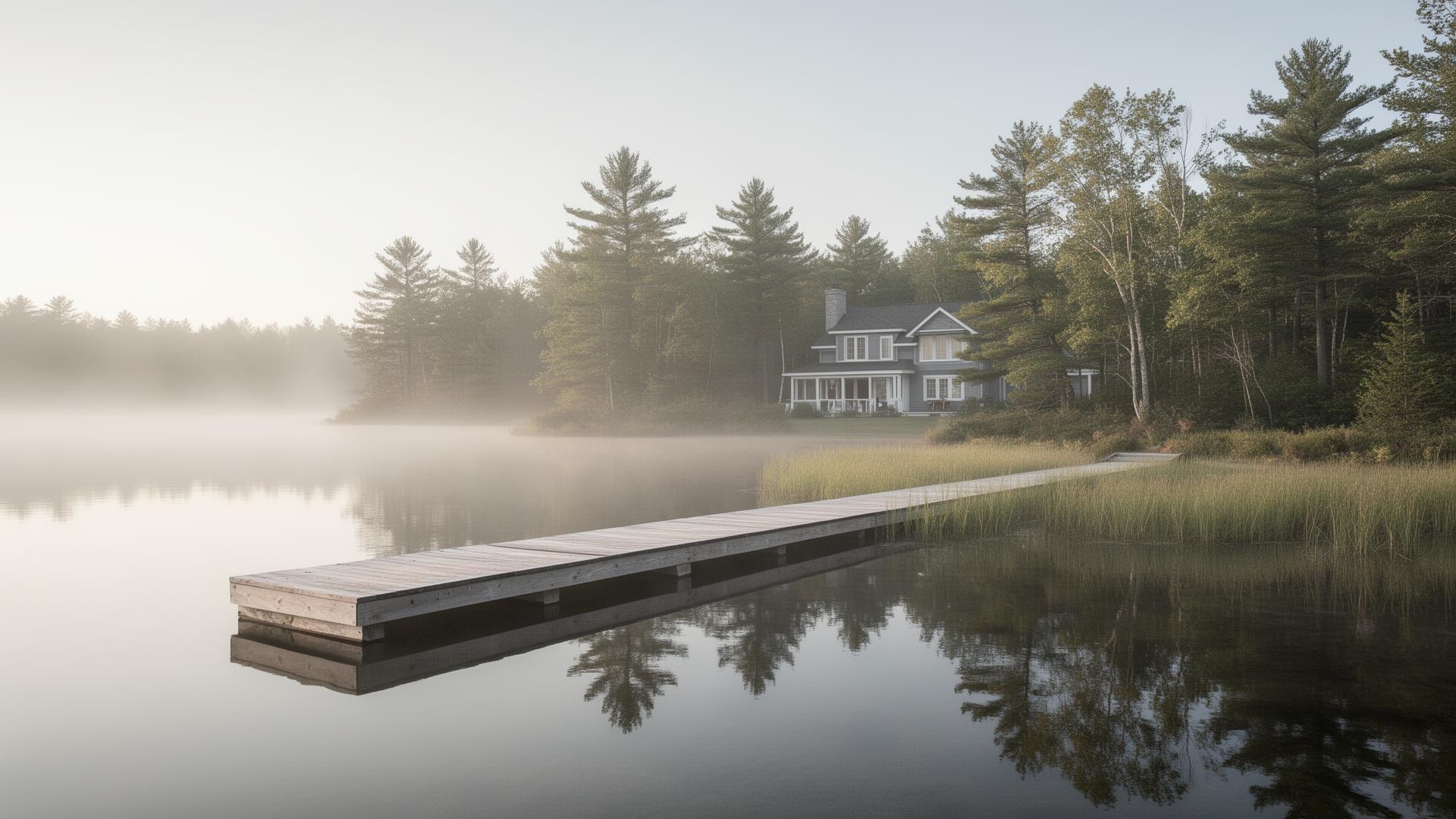
Why the Best Cottage Technology Is the One You Never Notice
The most successful technology is often invisible technology — systems that work so reliably and intuitively that they fade from awareness entirely. For Georgian Bay cottages, where the goal is escape and restoration, this invisibility is particularly valuable.
The Escape Paradox
People come to Georgian Bay to escape. To disconnect from the demands and complexity of urban life. To find restoration in natural beauty and simpler rhythms.
Technology seems to contradict this escape. More systems mean more complexity. More automation means more dependence on things that might fail. More connectivity means the urban world follows you north.
Yet the alternative — cottages without modern comfort and convenience — has limited appeal. Nobody wants to vacation in discomfort. The challenge is technology that serves without intruding, that provides modern convenience without the complexity that typically accompanies it.
The Invisibility Standard
The test of successful cottage technology is simple: do you notice it?
You shouldn't notice that the temperature is comfortable — it just is. You shouldn't struggle to find the right light switch — lighting responds appropriately. You shouldn't wonder whether the property is secure — security operates invisibly. You shouldn't think about the technology at all.
This invisibility requires more sophistication, not less. Systems must anticipate needs rather than waiting for commands. Controls must be intuitive enough that users act without conscious thought. Reliability must be absolute enough that the possibility of failure never enters consideration.
Reliability as Foundation
Technology you notice is often technology that failed. The streaming service that buffers during the family movie. The speaker that dropped from the network. The thermostat that required resetting after a power flicker.
Invisible technology requires reliability that exceeds normal expectations. Equipment rated for conditions more demanding than it will actually experience. Redundancy in critical systems. Automatic recovery from any predictable failure. The boring engineering that makes interesting experiences possible.
Georgian Bay conditions test equipment in ways that reveal quality differences invisible in showrooms. The investment in reliability pays dividends in years of invisible operation rather than repeated service calls and replacements.
Anticipation Over Reaction
Reactive technology waits for commands. You push buttons, speak words, tap screens. The technology responds. You remain aware of the technology because you must continuously interact with it.
Anticipatory technology acts before commands become necessary. The cottage warms because you're approaching, not because you asked. Lights respond to dusk, to occupancy, to activity patterns learned over time. The system does what you would have asked it to do, before you had to ask.
This anticipation requires understanding of patterns and preferences developed over time. The technology learns the household. It adapts to rhythms. It becomes an extension of intention rather than a tool requiring operation.
Simplicity Through Sophistication
True simplicity isn't primitive. A cottage with no technology is simple — and uncomfortable, inconvenient, and poorly protected. A cottage with basic technology may be functional — but requires constant user attention and management.
A cottage with sophisticated technology properly designed achieves the highest form of simplicity: complexity hidden so completely that users experience only ease.
The sophistication exists. Behind the walls, in equipment rooms, in programming and configuration. But users never encounter that complexity. They encounter a cottage that simply works.
The Longevity Commitment
Technology designed for invisibility must be designed for longevity. Systems that require replacement every few years keep themselves visible through constant obsolescence and upgrade cycles.
Long-lived technology uses architectures that accommodate change without wholesale replacement. It favors open standards over proprietary lock-in. It separates components that evolve quickly from infrastructure that should last decades.
This longevity focus sometimes means choosing slightly less cutting-edge options in favor of proven, stable, well-supported solutions. The newest technology is often also the least proven and most likely to be abandoned.
The Trust Relationship
Invisible technology ultimately requires trust. Trust that the cottage will be comfortable when you arrive. Trust that security operates even without monitoring. Trust that problems will announce themselves before becoming emergencies.
This trust develops over time through consistent, reliable experience. Every time the cottage performs as expected, trust deepens. Every failure, no matter how minor, erodes trust and makes the technology visible again.
Building this trust requires getting things right from the beginning. Design that anticipates real-world conditions. Installation that follows best practices. Commissioning that verifies every function. And ongoing maintenance that keeps reliability high.
The Ultimate Measure
When cottage owners describe their technology, the best response is blank confusion. "What technology?" When they describe their cottage experience, technology shouldn't appear at all. Comfort, convenience, beauty, peace — but nothing about systems, automation, or equipment.
The cottage exists for experiences that technology enables but shouldn't define. Family time. Natural beauty. Rest and restoration. Celebration and gathering. The technology succeeds when these experiences happen unencumbered by awareness of what makes them possible.
Georgian Bay cottage life, at its best, feels effortless. The technology that best serves this life is the technology that disappears entirely into the experience — present but invisible, sophisticated but simple, powerful but gentle.
That is the standard. Technology designed to disappear.