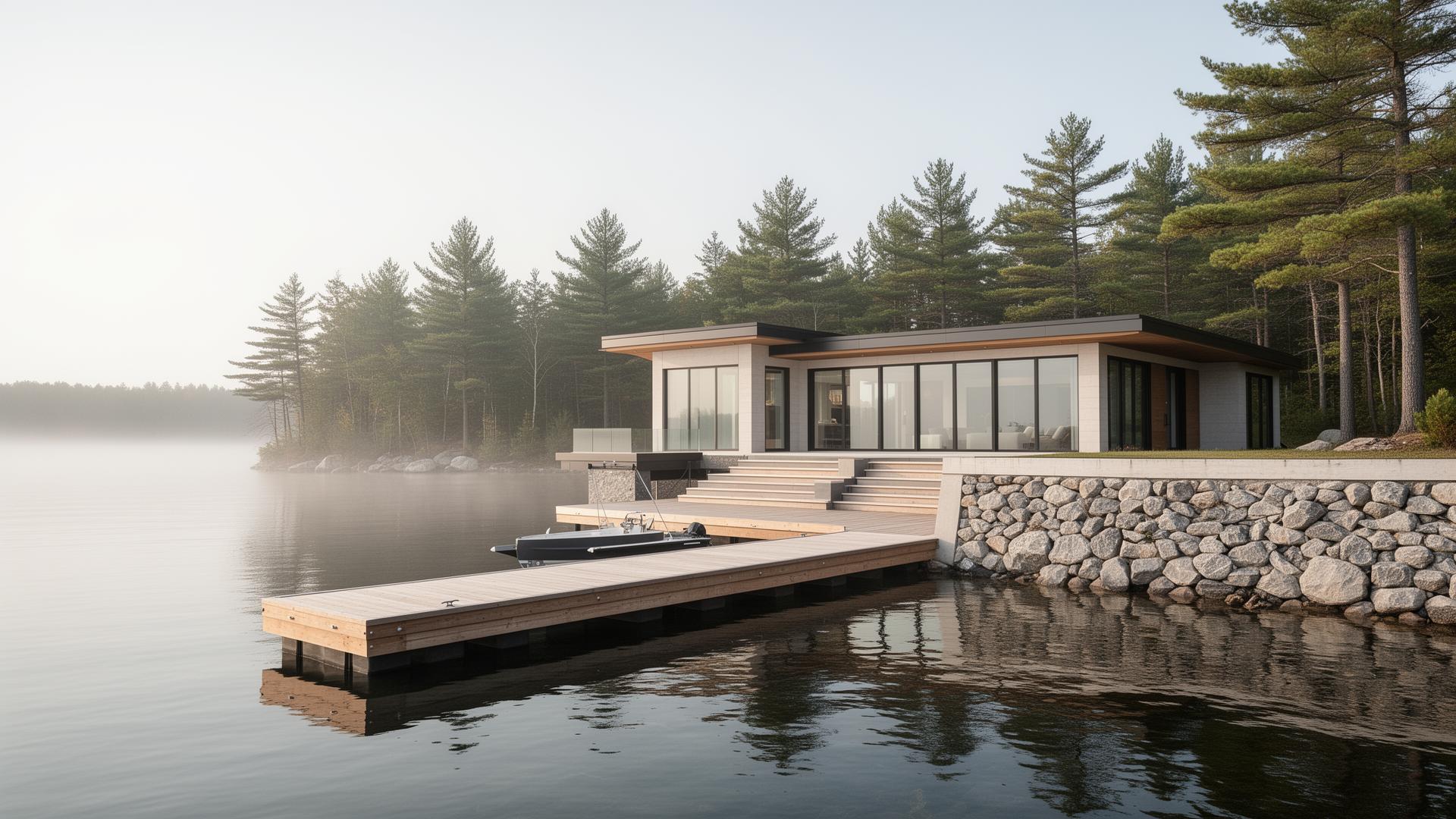
The Hidden Complexity of Waterfront Homes
Waterfront properties present challenges invisible to those who haven't worked extensively on the water. Georgian Bay shorelines, docks, and boathouses create environments that demand specialized approaches to every technology decision.
Water Changes Everything
The constant presence of water fundamentally alters how technology must be designed and installed. Humidity that would be considered extreme in a city home is simply normal at the waterfront. Salt from winter roads combines with moisture to create corrosive conditions. Spray from storms and boat traffic reaches further than most owners realize.
Standard residential equipment carries warranties that specifically exclude installation in "high humidity" or "marine" environments. A waterfront cottage is exactly those environments, even inside the structure. Equipment rated for city installation often fails within two or three seasons at the water — not from defects, but from environmental exposure the manufacturers never intended.
Shoreline Considerations
The transition from water to land creates a gradient of increasing hostility for technology. Docks and boathouses experience the most extreme conditions — direct spray, constant humidity, full sun exposure, and significant temperature swings. Equipment in these locations must be marine-grade, designed for yacht and commercial marine applications.
As you move up the shoreline, conditions improve but remain challenging. The first thirty feet from the water line still experiences splash during storms, humidity that condenses on cool surfaces, and UV exposure that degrades plastics and seals. Even interior spaces within direct sight of the water experience elevated humidity that standard equipment isn't designed to handle.
Landscape lighting near the water requires fixtures rated for direct burial and water exposure. Audio equipment must be weather-rated at a minimum, marine-rated when closer to the shore. Every cable run, every junction box, every mounting bracket must be selected with moisture exposure in mind.
Dock and Boathouse Technology
Georgian Bay dock life is central to the cottage experience. Music while swimming. Lighting for evening entertaining. Power for boat maintenance. All of this must function reliably in conditions that would destroy standard equipment.
Marine-grade audio systems designed for yacht installation become the baseline for dock zones. These systems use materials and sealing techniques developed for constant salt spray exposure — overkill for freshwater, but appropriate given the spray, humidity, and UV exposure docks experience.
Dock lighting presents particular challenges. Fixtures must handle not only weather exposure but also the mechanical stress of dock movement in waves. Connections must remain secure despite constant minor motion. Wiring must be protected from both water and the UV exposure that degrades standard cable jackets.
Boathouses add enclosed space complexity. These structures often experience temperature extremes beyond even the main cottage — cooler in summer due to water proximity, colder in winter due to limited insulation. Humidity inside boathouses can approach 100% during certain conditions. Any technology installed must handle these extremes without condensation damage.
Corrosion Prevention
Georgian Bay's freshwater is less corrosive than salt water, but winter road treatment means salt exposure reaches further than owners expect. Vehicles track salt onto properties. Wind carries salt spray from roads during winter months. Spring runoff carries salt through landscapes.
Metal components in technology systems must be selected with corrosion resistance in mind. Stainless steel and marine-grade aluminum replace standard zinc-plated hardware. Electrical connections use marine-grade terminals and heat-shrink sealing. Even fasteners receive attention — a standard screw can create a galvanic corrosion point that damages surrounding materials.
Protection Strategies
Successful waterfront technology installation combines equipment selection with installation practices that create multiple layers of protection.
Equipment enclosures provide the first layer. Properly rated NEMA enclosures keep moisture away from sensitive electronics. Venting and thermal management prevent condensation inside sealed enclosures. Location selection minimizes direct exposure when possible.
Cable protection forms the second layer. Conduit protects runs from UV exposure and physical damage. Proper burial depth prevents freeze-thaw heaving. Junction boxes are located above expected flood levels with drains to release any water that enters.
Maintenance access creates the third layer. Equipment installed where it cannot be easily inspected becomes equipment that fails unexpectedly. Thoughtful design ensures that connections can be checked, components can be replaced, and problems can be addressed before they cascade.
The Investment Perspective
Waterfront technology costs more than equivalent city installations. Marine-grade equipment is more expensive. Installation takes longer due to additional protective measures. Maintenance requires specialized attention.
This investment is appropriate because the alternative — repeated replacement of failed equipment, damage to structures from failed systems, and the frustration of unreliable technology — costs more in the long run. Waterfront properties deserve waterfront-appropriate technology from the beginning.
Georgian Bay waterfront living represents a significant investment in property and lifestyle. Technology that respects the unique challenges of waterfront installation protects that investment while enabling the experiences that make waterfront living so appealing.