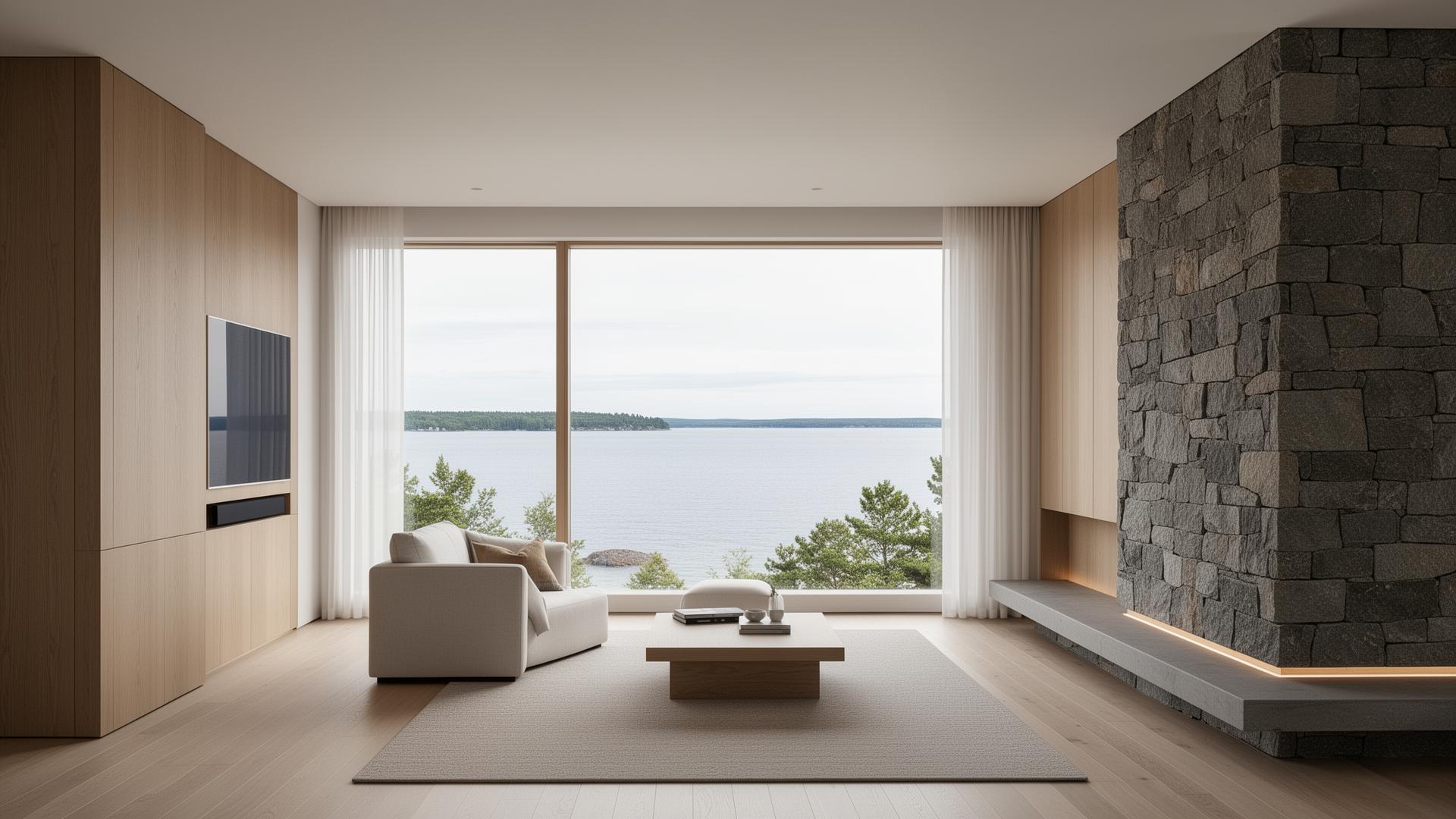
Technology That Respects Architecture
Georgian Bay properties often represent significant architectural investment — whether century-old family cottages with historical character or contemporary builds designed by noted architects. Technology should enhance these spaces without compromising the design vision that makes them special.
The Integration Imperative
Technology that announces itself visually is technology that competes with architecture. Visible equipment, prominent controls, cable runs that couldn't find hidden paths — these detract from spaces designed to create specific aesthetic experiences.
True integration means technology that disappears. Speakers invisible in ceilings or walls. Controls that match the aesthetic vocabulary of the architecture. Equipment housed in dedicated spaces rather than cluttering living areas. Cable infrastructure planned during construction rather than improvised afterward.
This integration isn't about hiding technology shamefully — it's about respecting the hierarchy of a well-designed space. The architecture should speak. The view should command attention. The technology should serve without drawing focus.
Working with Builders and Designers
The best integration happens when technology planning parallels architectural design. This requires relationships between technology integrators and the builders, architects, and designers who shape the physical space.
Early involvement allows infrastructure to be built into the structure — conduit runs before drywall closes, backing for future equipment installation, electrical capacity where it will be needed, network infrastructure that doesn't require visible cables.
Late involvement forces compromises. Surface-mount solutions where built-in options would have been possible. Equipment located for installation convenience rather than optimal performance. Cables that take visible paths because hidden paths were never provided.
Historical Properties
Georgian Bay includes properties with genuine historical significance — century-old cottages with character that can't be replicated. Technology in these spaces requires particular sensitivity.
Modern capability shouldn't require compromising historical character. Wireless solutions reduce the need for cable runs that might damage original materials. Carefully selected controls can complement period aesthetics. Equipment can be located in additions or service areas rather than primary spaces.
The goal is technology that feels invisible or at least unobtrusive within the historical context. Guests might enjoy perfect climate control, subtle lighting, and excellent audio without ever noticing the systems providing these experiences.
Contemporary Architecture
Modern Georgian Bay architecture often features open floor plans, floor-to-ceiling glass, and minimalist aesthetics that make equipment concealment both more important and more challenging.
Glass walls eliminate traditional equipment hiding spots. Minimal trim and clean lines mean any visible technology becomes prominent. Open ceilings may preclude traditional in-ceiling speaker approaches.
These challenges require creative solutions. Speakers integrated into millwork. Controls that become design elements rather than afterthoughts. Equipment rooms planned into the architecture. Lighting design that creates drama without visible fixtures.
Contemporary architecture often benefits from technology as design partner rather than necessary evil. When the architect and integrator collaborate from the beginning, technology can enhance the architectural vision rather than compromising it.
The Control Interface
How users interact with technology matters as much as where equipment hides. Control interfaces that clash with architectural intent undermine careful integration elsewhere.
The right interface depends on the space. In some cases, this means keypads that complement architectural hardware in finish and style. In others, it means eliminating visible controls entirely in favor of voice and mobile options. Sometimes it means carefully positioned tablets that become part of the millwork.
The worst option is generic controls that clearly belong to a different aesthetic vocabulary. Standard white plastic keypads in a rustic historical cottage. Industrial-looking touchscreens in a minimalist contemporary space. Any control that obviously doesn't belong.
Sound Without Speakers
Visible speakers compromise many design intentions. Fortunately, invisible audio options have matured significantly.
Architectural speakers designed for minimal visual impact when installed in ceilings or walls. In-wall subwoofers that provide bass without cabinet presence. Soundbars that integrate into millwork or furniture. Even wallpaper speakers that turn surfaces into audio sources without any visible equipment.
The right approach depends on the space and the required audio quality. What matters is that options exist for any architectural situation.
Lighting as Architecture
Lighting may be the most architectural of all technology categories. Well-designed lighting shapes how spaces are perceived, emphasizes architectural features, and creates atmosphere impossible to achieve otherwise.
Poor lighting design undermines architectural investment. Flat, even illumination that ignores the spatial qualities architecture creates. Fixtures that fight rather than complement the design language. Lighting that serves practical needs without contributing to aesthetic experience.
Collaboration between lighting designers, architects, and technology integrators produces results none could achieve independently. The architecture provides the canvas. The lighting design determines how that canvas is perceived. The technology makes the lighting design functional and controllable.
Documentation for the Future
Architectural integration requires documentation that outlives the original installation. Future owners, maintenance providers, and even the original owners years later need to understand what was installed, where it's located, and how to maintain it.
Hidden technology is easily forgotten technology. Complete documentation ensures that the investment in integration remains valuable over time, and that future modifications can maintain the integrity of the original design intent.
Georgian Bay properties represent significant investments in location, architecture, and lifestyle. Technology integration that respects and enhances these investments provides value that increases rather than diminishes over time.