HVAC Contractor vs Smart Home Integrator
A new build or a big renovation brings two trades to the same thermostat wire. The HVAC contractor designs and installs the heating and cooling. The smart home integrator ties it into the lights, the app, and the rest of the house. When nobody draws a line between them, things fall through the gap.
This post explains the HVAC contractor vs smart home integrator split. Who sizes the system? Who controls it? What does each trade need from the other at rough-in? And who do you call when the heat stops? It is written for custom homes and cottages in Collingwood and The Blue Mountains.
HVAC contractor vs smart home integrator: the short version
The HVAC contractor owns the equipment. That means the furnace or heat pump, the boiler and floor heat, the ducts, the ERV, and all gas and refrigerant work.
The integrator owns the control layer. That means the thermostats and sensors the family uses, the link to the smart home system, schedules, scenes, and remote alerts.
Our smart HVAC and climate control work is built on that split. We work alongside your HVAC contractor. We do not replace them.
Who sizes the system
Sizing is the HVAC side, and in Ontario it is not a guess. The Building Code requires heating equipment in new homes to be sized using CSA F280. That is the Canadian standard for heating and cooling loads. It looks at walls, windows, insulation and how cold it gets where you live.
An integrator should never pick the size of your furnace or heat pump. What we can do is share how the house will be used. A chalet that sits cool all week and warms up for Friday night is not the same as a home that is lived in every day.
Who touches the gas
Gas work is not shared. In Ontario, only TSSA-registered contractors and certified technicians can install or service furnaces, boilers, water heaters and other appliances that burn fuel.
The integrator works on the low-voltage side only. If a job means opening the furnace or touching a gas line, that is the HVAC contractor's job.
What each trade needs at rough-in
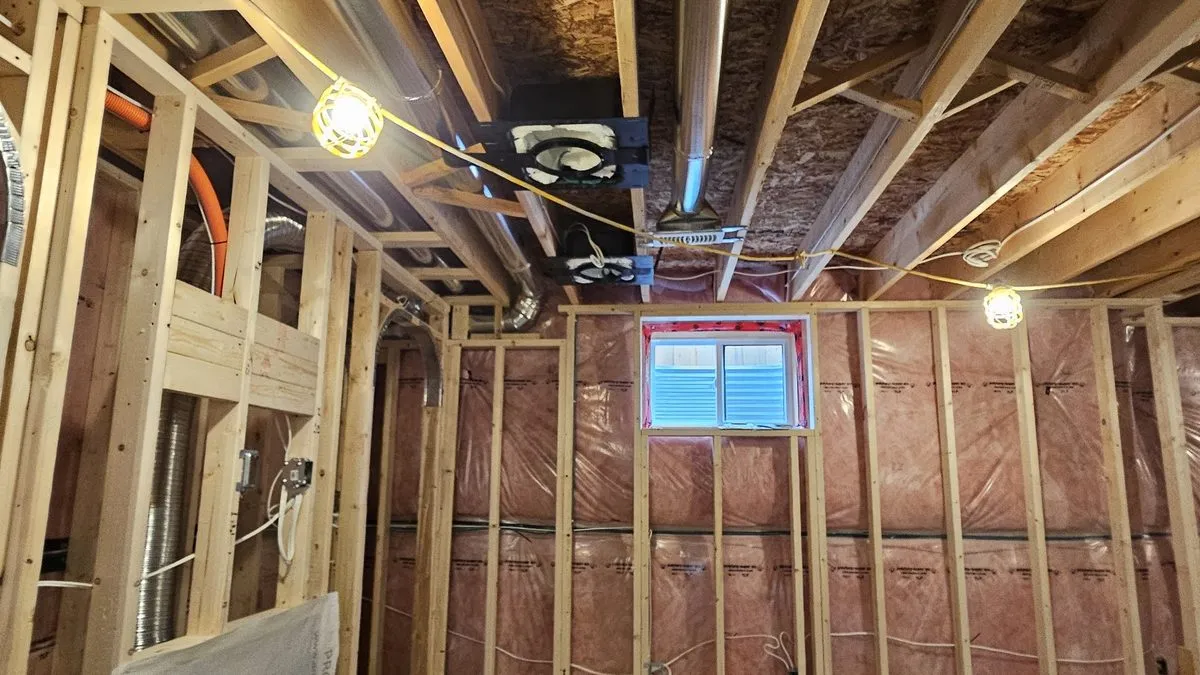
Most problems start at rough-in. The walls are open, and each trade assumes the other one handled it. Settle these before drywall:
- Thermostat wire with enough conductors, including a common wire, to every thermostat spot.
- Thermostat and sensor spots away from windows, fireplaces, stairs and direct sun.
- How the zone panel, ERV, humidifier and any snowmelt system will be run.
- A network drop in the mechanical room if the equipment has a connected controller.
- Who programs what, written down, so nobody undoes the other's settings.
Our pre-construction consulting covers this checklist with your builder and HVAC contractor at framing.
Zones, snowmelt and the extras
The more zones and extras a house has, the more the HVAC contractor vs smart home integrator split matters. A single-zone furnace with one smart thermostat barely needs an integrator. A chalet with six zones, heated bathroom floors, an ERV and a heated driveway is different.
That is where full integration earns its place. Climate can join scenes, so one press of a vacation mode turns every zone down and arms the alarm. On Crestron or Control4, temperature sits beside lighting and audio in one app. The HVAC contractor still owns every piece of equipment behind it.
Who to call when the heat stops
Start with what failed. If the furnace, boiler or heat pump is not running, call the HVAC contractor. If the equipment runs but the app is wrong, a zone ignores its schedule, or a thermostat drops offline, call the integrator.
Remote alerts make that call faster. When a zone drifts outside its setpoint, the owner gets a push alert. At a cottage in winter, that warning can come before pipes are at risk. Our winter shutdown checklist covers what else to set up before you leave.
Questions we get
Does a smart home integrator replace my HVAC contractor?
No. The HVAC contractor designs, installs and services the heating and cooling equipment. The integrator links the controls to the rest of the house.
Who sizes my furnace or heat pump?
The HVAC side. Ontario's Building Code requires heating equipment in new homes to be sized using the CSA F280 standard.
Can an integrator work on my gas furnace?
No. In Ontario, gas appliance work must be done by a TSSA-registered contractor with certified technicians. Integrators work on the low-voltage controls only.
What should be decided before drywall?
Thermostat wire runs, thermostat and sensor locations, how the zone panel and ERV are controlled, a network drop at the mechanical room, and who programs what.
Will a smart system stop me from changing the temperature at the wall?
No. Every wall thermostat stays a working thermostat. The smart layer adds remote control, scenes and schedules on top.
Do you integrate climate control in Craigleith and Thornbury?
Yes. We work across Collingwood, The Blue Mountains, Thornbury, Meaford, Wasaga Beach, Creemore, Craigleith, and Clarksburg, alongside your HVAC contractor.
Two trades, one plan
The HVAC contractor vs smart home integrator question is not a contest. One trade sizes and installs the equipment. The other makes it easy to run and to watch from anywhere. Put both at the same table at rough-in. Write down who owns what, and who programs what. Then the thermostat wire stops being a gap that nobody owns.
Call 249-444-7793 to book a free design consultation. Bring your HVAC contractor's plans and we will map the controls around them.