Home Theatre vs Media Room: Which One?
The room that gets called a home theatre is often a media room, and the room that gets built as a home theatre sometimes sits empty. Both are good rooms. The mistake is building one while picturing the other.
If you're planning a lower level in a chalet or a bonus room in a Collingwood build, this is the decision to make before anything else. Here is the home theatre vs media room choice as a set of questions, the one that can't be undone, and what has to be settled at framing.
The hours test
Start with a calendar, not a catalogue. Over a normal month, how many hours would this room be used for films with the lights down? Now count the hours for sport, gaming, kids' shows, and people sitting in the room talking.
If films with the lights down win, a dedicated theatre earns its keep. If everything else wins, a media room is the room you'll use. A dedicated theatre used four times a year is the regret we hear about most, and it's the easiest one to avoid.
What each room gives up
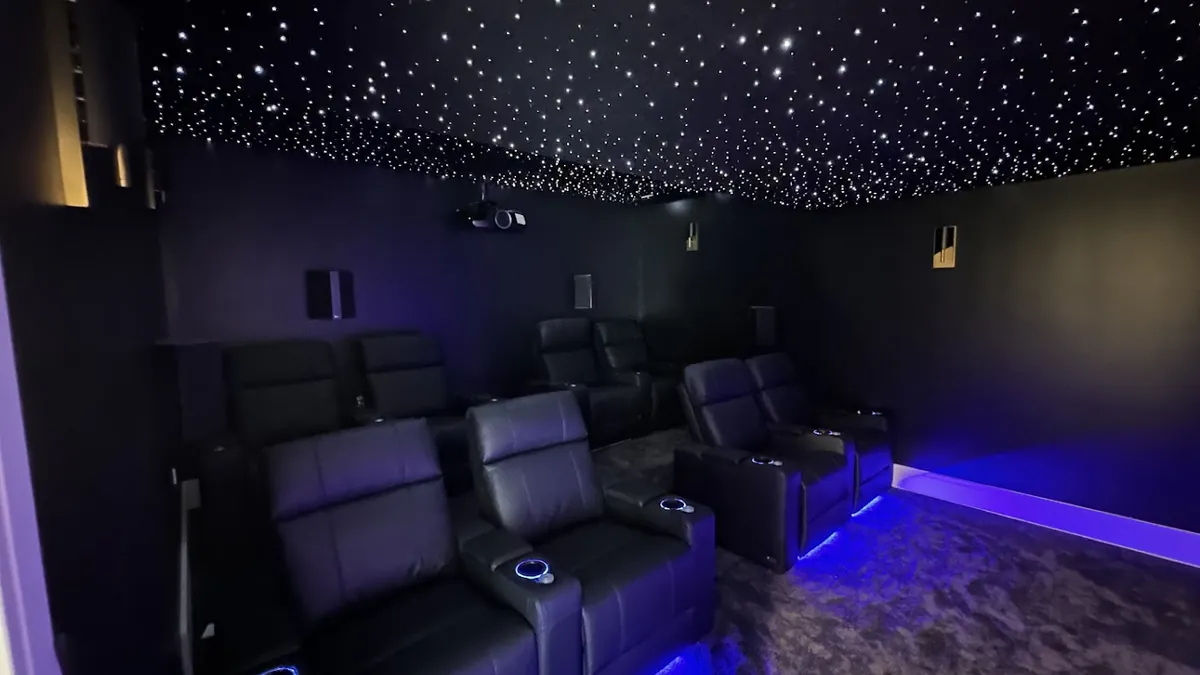
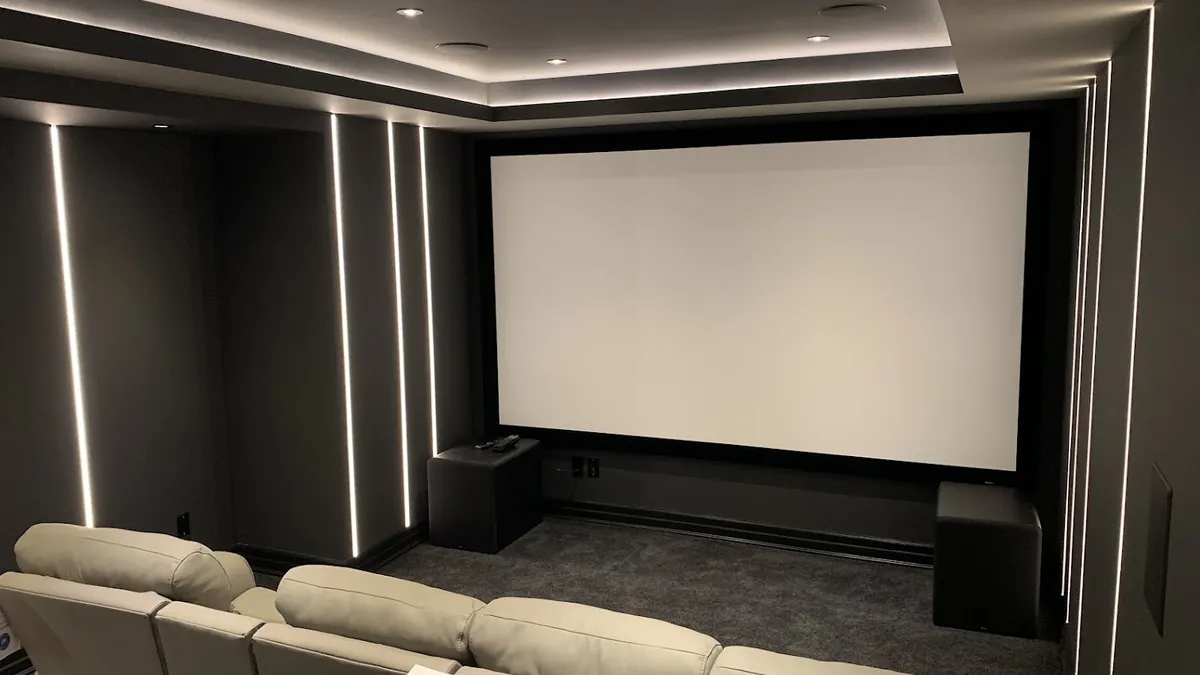
A dedicated home theatre is a single-purpose room. Light is fully controlled. Every seat faces the screen. The walls and ceiling can be treated for sound. It is the better room for films, and nothing else happens in it.
A media room is a room you already live in. It has windows, a fireplace, and furniture facing several ways. It gives up some picture and sound quality to stay a room. Our media room design and installation page covers how that trade-off gets managed.
Neither is wrong. They answer different questions.
The one-way door
Here is the part most guides skip. A media room can become a theatre later. A theatre rarely goes back.
A media room built with the right wiring, a big screen, and good speakers can grow. Add blackout shades. Add seating. Add acoustic treatment. Each step moves it toward a theatre without undoing the last.
A dedicated theatre has risers, a fixed screen, fabric walls, and no windows. Turning that back into a family room means demolition. If you're unsure, build the media room with room to grow. That is the lower-risk choice.
What has to be decided at framing
Three things only happen while the walls are open:
- Wiring: speaker wire, video cable, and network drops to every spot the room might ever need, including height speakers for Atmos.
- Structure: a flat section of ceiling for a projector, soffits for speakers, and a riser if tiered seating is ever planned.
- Sound control: insulation, a solid-core door, and sealed openings so a late film doesn't wake the house.
Our pre-construction consulting work exists for this stage, and our post on when to bring in an integrator on a custom build covers the timing.
The lower level that has to be both
In a lot of chalets, the lower level is the only option. It also has to be the games room, the guest space, and the place the kids disappear to. That is a media room with theatre ambitions, and it can work well.
The pattern that holds up has four parts. One wall for the screen. Seating that faces it but can turn. Lighting scenes that take the room from bright to dark in one press. And speakers in the ceiling and walls, not on the floor. Our lighting control work handles the scene side.
Which one helps at resale?
Think about the next owner. A media room that doubles as a family room is a room any buyer can use. A windowless theatre suits a narrower group. If resale matters to you, that tips the balance toward the media room.
Questions we get
What is the difference between a home theatre and a media room?
A home theatre is a single-purpose room with full light control, fixed seating, and treated walls. A media room is a living space with great picture and sound that still works as a room. Each gives up something the other has.
Can a media room become a home theatre later?
Yes, if it was wired and framed with that in mind. Shades, seating, and acoustic treatment can be added in stages. The reverse is rarely practical.
Can a lower level be both a theatre and a games room?
Yes, and it's common in chalets. Build a media room with a theatre-grade screen and speakers. Add lighting scenes for both uses, and seating that can face the screen or the room.
Do I need a projector for a dedicated theatre?
Usually. In a fully dark room, a projector gives the largest image and the most cinema-like picture. In a media room with windows, a large TV is often the better display.
What should I decide before drywall goes up?
Wiring to every speaker, screen, and equipment spot. A flat ceiling section or soffit where the projector and speakers will go. Any sound insulation. Everything else can wait.
Do you design media rooms and theatres in Meaford and Wasaga Beach?
Yes. We design both across Collingwood, The Blue Mountains, Thornbury, Meaford, Wasaga Beach, Creemore, Craigleith, and Clarksburg, and our home theatre design and installation page covers the dedicated-room side.
Decide by use, not by name
The home theatre vs media room choice comes down to hours, not labels. Count how the room will be used. Remember that the media room is the one you can grow. Settle wiring and structure before the walls close. Get those three right and either room will be one the family actually uses.
Call 249-444-7793 to book a free design consultation. We'll walk the space with you and plan it for how you'll really watch.