Cottage Wi-Fi: How Many Access Points?
Your internet provider sent you one router, and it was built for a small home in town. A Georgian Bay cottage is a different problem: thick walls, more than one floor, a detached garage, a dock, and maybe a bunkie. One box in the mechanical room cannot cover all of that.
So how many access points do you need? It depends on four things, and square footage is not really one of them.
What your walls are made of
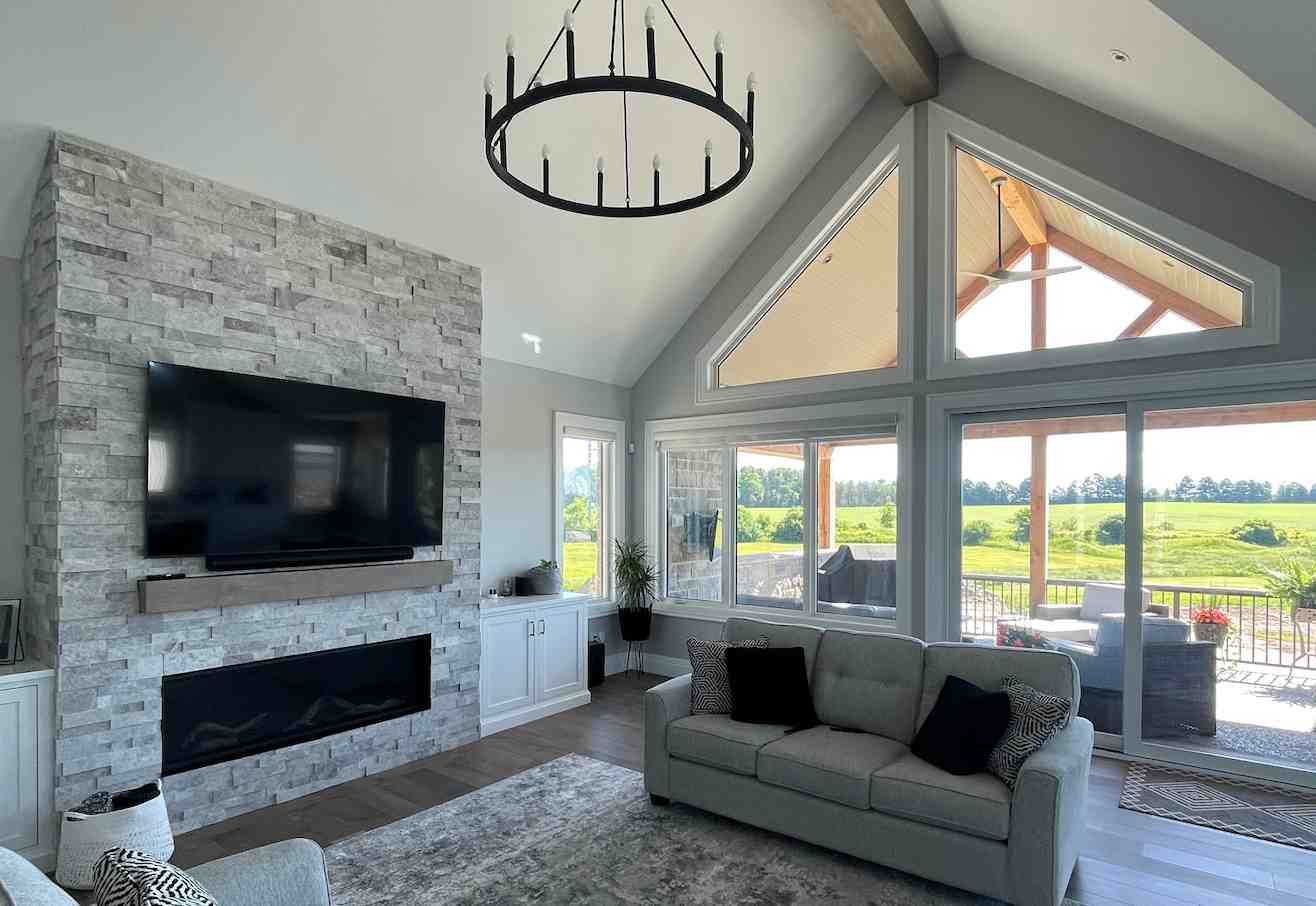
Drywall barely slows Wi-Fi down. Stone, timber, concrete, and in-floor heating stop it cold, and low-e glass bounces it back. A 2,000 square foot cottage with stone walls can need more units than a 4,000 square foot drywall home. Spray foam insulation causes the same trouble. It is great for heating bills and hard on wireless.
How the space is laid out
Wi-Fi hates corners. Put the router at one end of a long, narrow cottage and the far end will always be dead. Floors make it worse. The signal weakens each time it passes through one. You want coverage close to every spot where people use the network, not one strong transmitter shouting from the basement.
What sits outside the main house
Detached buildings are where a single router gives up. A garage, workshop, bunkie, or dock needs its own coverage, usually from a weatherproof outdoor unit fed by a buried cable. If people use the outbuildings, plan on at least one access point per building.
How many devices are on the network
A modern cottage runs far more than phones and laptops. Cameras, thermostats, speakers, TVs, doorbells, and smart lights all stay connected at once. Each access point can only serve so many devices well, so a busy smart home needs more coverage than a simple one of the same size.
The rule of thumb, and where it breaks
For normal construction, one access point per floor is a fair starting point. Add one for each detached building, and another for a large outdoor living area. But rules of thumb fail in the exact spots where cottages are odd: stone walls, long footprints, and waterfront layouts. That is why our Wi-Fi installations start with coverage planning rather than a box count, and why full-property wireless coverage design treats the dock and the driveway as part of the network. Wireless standards keep moving, and the Wi-Fi Alliance publishes what its members are working on now.
How they connect matters more than how many
One thing counts for more than the number: how each unit connects back to the router. Units wired with proper structured wiring deliver full speed, while mesh gear that relays the signal wirelessly loses speed with every hop. Wired backhaul is the difference between Wi-Fi that works and Wi-Fi that almost works.
If parts of your property feel like a dead zone, call 249-444-7793. We will map the coverage your cottage needs before we recommend a single piece of hardware.